Collection architecture
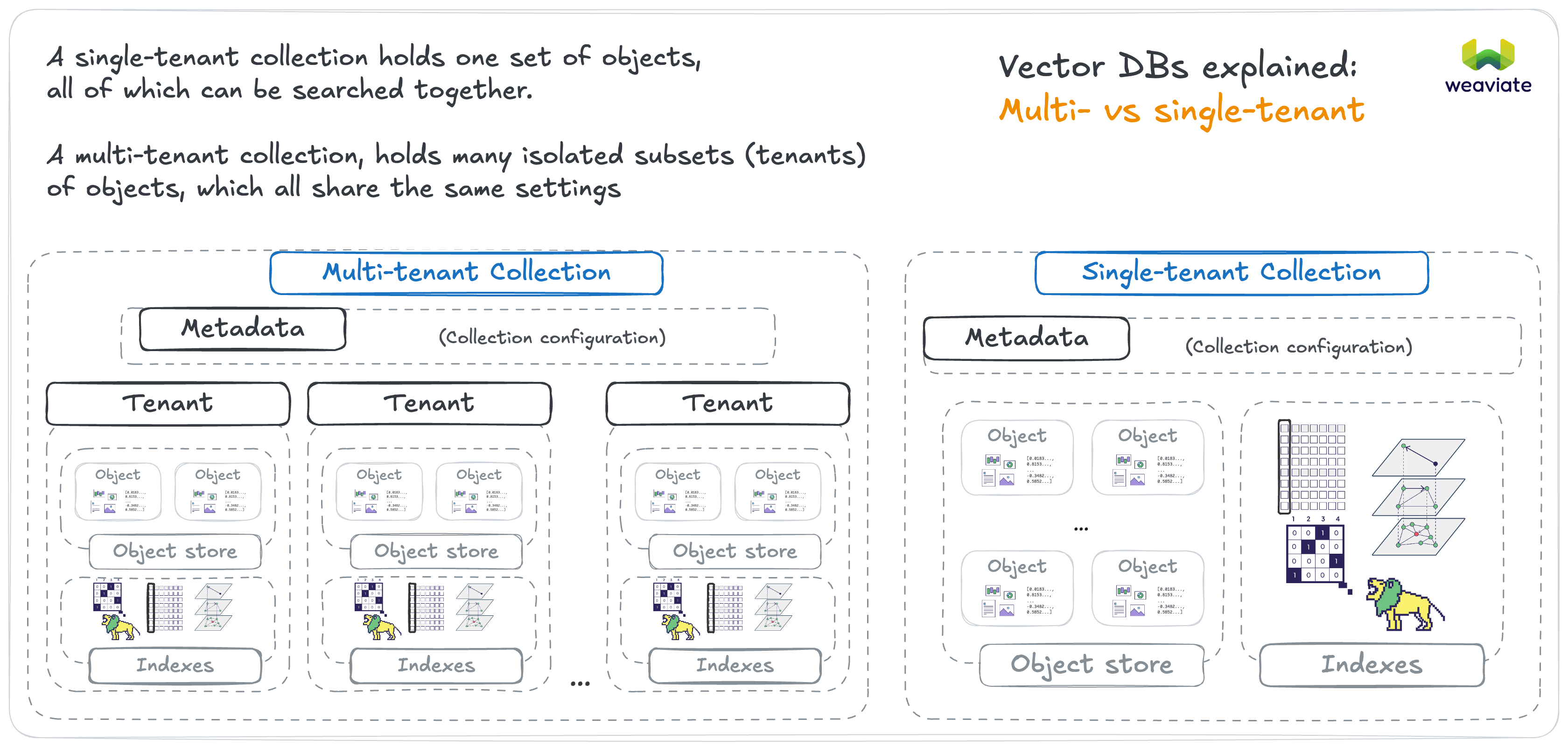
Collection design is one of the most important architectural decisions in Weaviate. Each collection maintains its own indexes and configuration, consuming memory and storage. Establishing the right collection architecture is critical for your downstream capabilities.
Number of collections
If a set of objects are to be searched together → Consider one collection
- All objects share identical data schema and settings
- Enables cross-category search
- Example: E-commerce products across different categories
✅ One "Products" collection with electronics, clothing, books
If multiple approaches to search required → Consider one collection & multiple vectors
- Different vectorization strategies can be used on one data schema
- Each vector optimized for its search strategy
- Example: Movie summary (text embedder) + images (multi-modal embedder)
✅ "Movies" collection, with "description" vector + "image" vector
If schemas fundamentally differ → Multiple collections
- Different property structures prevent sharing a schema
- Example: User profiles vs blog posts have completely different fields
If need data isolation between subsets → Multi-tenant collection
- Same schema and search functionality per tenant
- Data isolation without operational complexity
- Example: SaaS document search where each customer needs isolated data
Learn more
What's next?
Now that you understand collection architecture, let's dive into schema design - how you structure the data within your collections.
Login to track your progress